Car Culture Summary

Car culture is as it sounds, various communities built on a love for cars. There are more than just the three presented cultures, and then there are many subcultures, but in my opinion, these are likely the three most well known. Car culture is not just about going fast, there are levels to it that cannot be sufficiently explained here. Despite the differences between cultures and subcultures, all are united by a deeply seated love and appreciation for a set of wheels and tuned motors. Some cultures are more obscure than others, so only these three will be talked about here.

American Muscle has its roots in the first ever cars built to go fast. American muscle is defined by being rear wheel drive, and having large displacement V8 powerplants. Muscle cars typically drag race now, trying to set the best time in the 1/4 mile track. Exotics vary widely, but are usually denoted by their low profile and aerodynamic design. Exotics are typically mid or rear engine, either rear or all wheel drive, and use smaller displacement, but extremely high-revving motors, and sometimes have 10 or more cylinders depending on the car. Modern Exotics are extremely expensive, and toys for only those who can afford them. Japanese Domestic Market cars (JDM) have a cult following behind them, as they are extremely light, nimble cars, and can be modified to the extreme. These cars are denoted by being either rear or front wheel drive with small, usually modular, 4 cylinder engines that are overbuilt and can handle lots of power stock. These cars are usually inexpensive compared to American muscle and especially exotics.

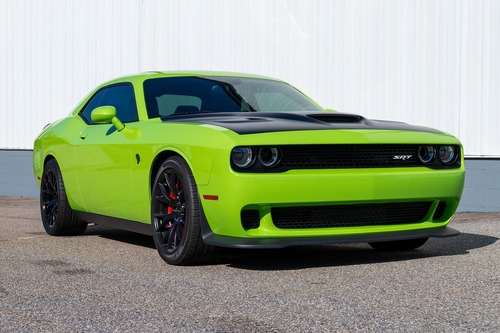
image of a muscle car

American Muscle Cars

American muscle is probably the most famous culture within the car community. Muscle cars are known for having high horsepower engines, high torque, rear-wheel drive, and of course, V8 engines. American muscle has a cult following to rival JDM, and for good reason, car races have their roots in America. These cars are known for their noise, their speed, and their power, and its all because of the American prohibition. During the prohibition, bootleggers needed to outrun the police, and their stock vehicles weren't cutting it, so they started putting superchargers on their motors to feed the car more air, resulting in more combustion, and resulting in more horsepower. More horsepower means more speed, and this led to bootleggers racing eachother, which resulted in possibly the most well-known motorsport in America, NASCAR.

Unlike supercars, American muscle cars have cross-plane crank V8 engines. This type of engine allows American muscle cars to create a fairly equal, or more torque-heavy engines. Super cars typically have less torque than horsepower, which is not the case for American muscle cars, which have equal or sometimes more torque. This is usually traded for having massive motors, with some being in excess of 7 liters. This also means that they often break traction easier, and can do burnouts more easily than super cars. This is important for performance on quarter-mile tracks, where the tires need to be warm to gain traction. Cross-plane engines are responsible for giving American Muscle cars their signature "burble" sound.
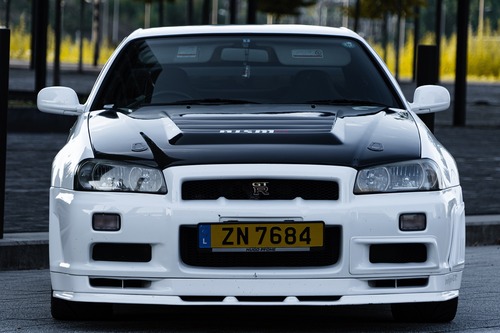
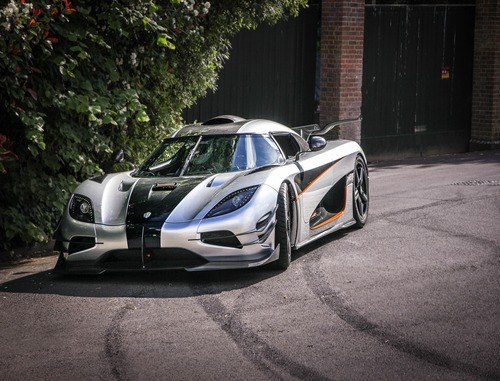
image of a GTR

Japanese Domestic Market

Japanese Domestic Market cars contain a lot of cult classics, from the Nissan Skyline, to the Toyota Supra, to the Honda Civic EK/EJ/EG/etc. These cars gained alot of popularity in the 90s-early 2000s because of their ability to be tuned. Their engines are usually small, but extremely durable, and overbuilt for what they were originally meant for, which means they can easily accept modifications like turbochargers, intakes, new exhausts, and so on without having to be modified or improved to handle the extra power. Additionally, they were inexpensive, and could make power similar to supercars for a fraction of the cost. JDM cars are of course well known for their role as drift cars, but now many JDM cars live on as qnuarter-mile queens, show cars, street cars, and the most easily tunable cars on the market.

You may notice that when researching JDM cars, they typically only make around 276 horsepower. This was due to a volunatry gentleman's agreement between many Japanese automanufacturers to prevent what was called a "horsepower war." Illegal racing was very popular in the 1980s and into the early 2000s, and groups were looking to make faster and faster cars to race and outrun the police. Japanese automanufacturers wanted to prevent the races to curb the increasing fatal accidents in Japan, so they decided to limit their continuing models to just 276 horsepower. This did not stop the extreme modifications, where these cars would be pushed in excess of 500 horsepower on stock motors with minimal engine reinforcment. Now some of these cars are making in excess of 2000 horsepower with heavily modified and reinforced motors, transmissions, and frames. Note that these extremely over-powered cars are built privately, not by the companies themselves.

image of a GTR

Supercars

Supercars have their roots in European motorsports post-WW2. Italy is especially known for supercars. Italy is home to some of the most well known supercar brands, like Ferrari, Lamborghini, and Maserati. Supercars are primarily denoted by their signature sleek, aerodynamic design, being either rear wheel drive or all wheel drive, being nimble and fast, having flat-plane crank engines, and being extremely expensive, with some supercars being upwards of 5+ million dollars.

Allow me to explain some things about identifying a supercar. Firstly, I want to explain what a "flat plane crank engine" actually is. This means that the crankshaft of the engine is arranged in such a way that it gives the motor a certain sound. The arrangement of the engine in this manner allows it to achieve extremely high RPMs and power in a typically smaller package, with some V8 engines being as small as 2 liters. There is a sound file of a flat plane crank V8 included. Additionally, there are different drivetrains, and supercars typically use rear-wheel or all-wheel drive systems. Rear-wheel drive means that the engine power is delivered to the rear wheels which offers superior handling and lower weight, as less components are needed to deliver power to the wheels. All wheel drive means that the engine powers all 4 wheels, and provides superior acceleration, and is what most supercars use now.

Get in touch

Please email me with any questions.

Name:

Email Address:

Phone:

Comment: